The transformation of SPL and beneficial use of resulting by-products has a net positive effect on energy utilisation and the environment
Regain has undertaken a study into the overall environmental effects of the SPL transformation process and HiCAl product use in cement manufacture.
Environmental Life Cycle Assessment (LCA) provides a basis for quantifying the economic and environmental effects of industrial processes. An LCA approach in accordance with the International Standard ISO 14044 for Environmental Management – Life Cycle Assessment provides a basis for characterising resource consumption, resource replacement, energy consumption, energy savings and other significant environmental aspects associated with the optimised use of SPL in cement manufacture.
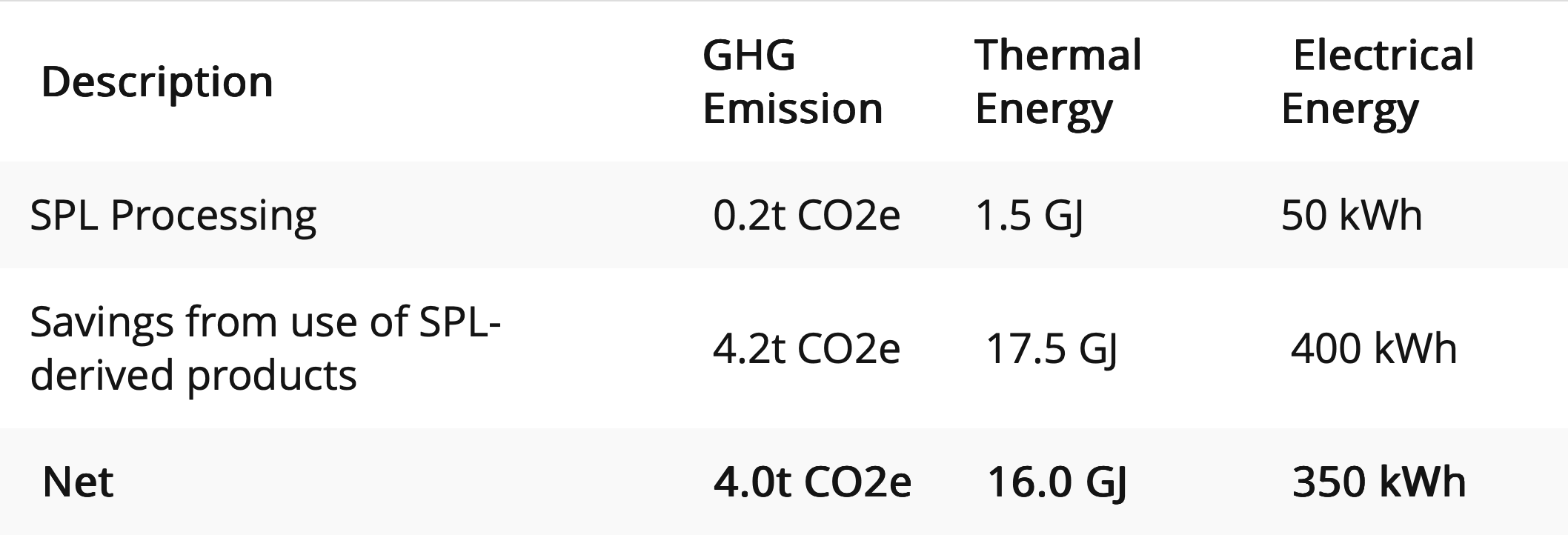
The functional unit around which this life cycle analysis is based is one metric tonne (1,000 kilograms) of a Regain product named HiCAl 30 which is manufactured by Regain for use in the cement industry. It is representative of the range of products manufactured and marketed by Regain as it is composed of the same proportion of materials that Regain recovers from the primary aluminium smelting industry. Overall energy consumption, energy savings and GHG emissions associated with the functional unit of one tonne of SPL are summarised in the table below.
Summary of Emission and Energy Aspects for One Metric Tonne of SPL